What Was the Universe Like in Its Infancy? Most Accurate Map of the Early Cosmos Released
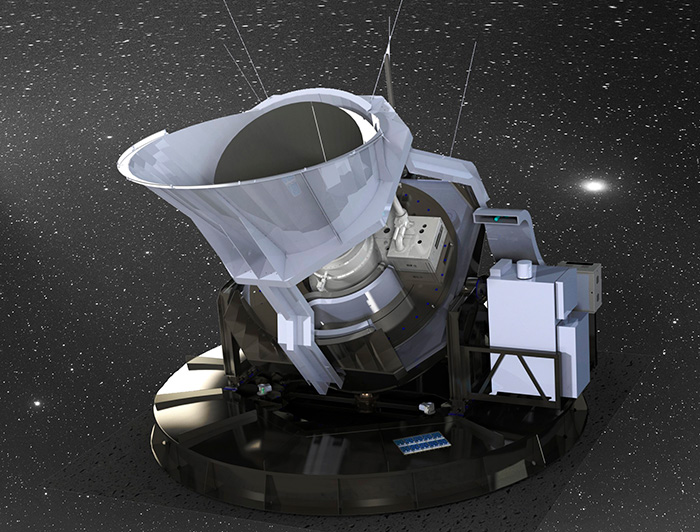
An international team of researchers from over 60 institutions, and with the participation of the Atacama Cosmology Telescope (ACT), was able to produce the most detailed map to date of the infancy of the universe, long before the formation of stars and galaxies. Among the researchers is Rolando Dünner, Associate Researcher from the Center of Excellence in Astrophysics and Related Technologies (CATA) and scholar from the Astrophysics Institute at UC Chile.
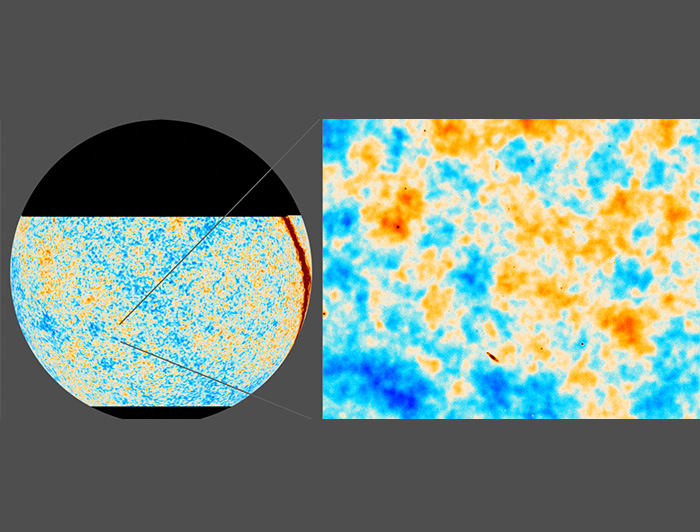
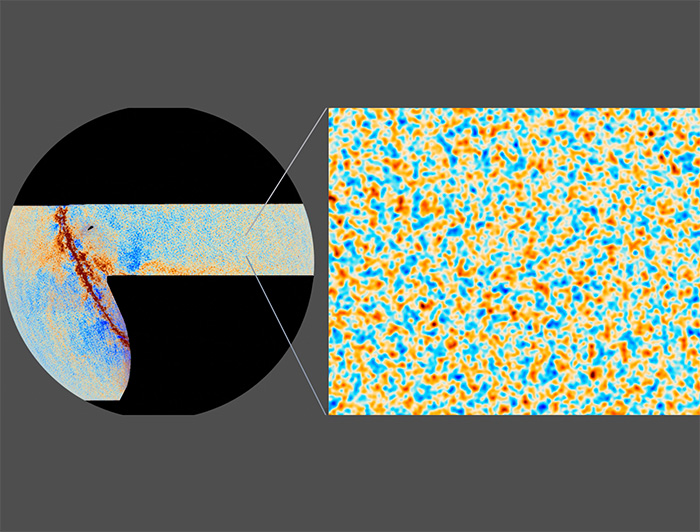
photo_camera These maps show the distribution and initial dynamics of matter of the expanding universe, providing the initial conditions for the formation of the structures that would be shaped by gravity, such as stars, galaxies, and their distribution in the cosmos. (Photo credit: ACT Collaboration)
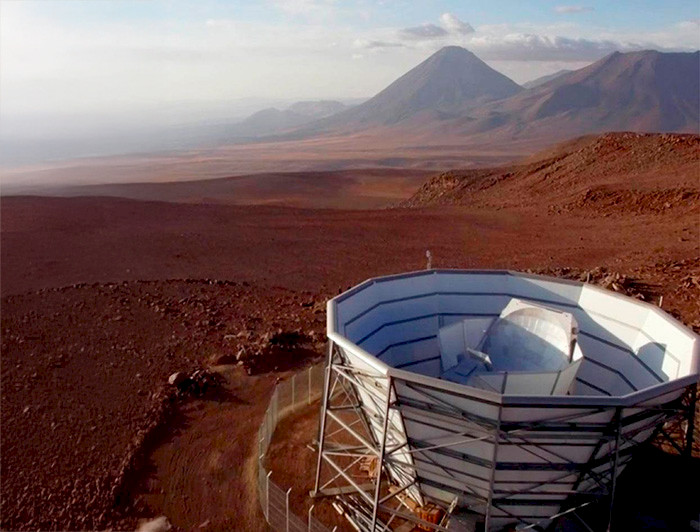
A study led by Princeton University and Pennsylvania University, with the collaboration of the Atacama Cosmology Telescope (ACT), a cosmological millimeter-wave telescope located at Cerro Toco in the middle of the Atacama Desert, has captured the clearest images yet of the infancy of the universe, the earliest cosmological age to date accessible to humans. These new images reveal the universe when it was 380,000 years old, which is equivalent to a “baby picture” of a cosmos that is now in its middle age.
These images are produced in the cosmic radiation background, known as “cosmic microwave background” (CMB). The experts in the study assure that one can see the state of the universe long before the formation of the first stars and galaxies. The map produced also contains information about the polarization of radiation, which reveals unique information about the movement of the hydrogen and helium plasma that filled the universe at that time.
In Chile, PhD Rolando Dünner, associate researcher from the Center for Excellence in Astrophysics and Associated Technologies (CATA) and scholar from the Institute of Astrophysics, has been part of the research group from the start, and has highlighted the place of our country in this discovery. “The study of the cosmic microwave background (CMB) has revolutionized our understanding of the universe, allowing humanity to answer to very deep questions about our existence, such as: ‘When did everything start? How was the universe formed? What is the origin of galaxies, stars, planets, and even ourselves?’.” The fact that an important part of these observations has been made from our country places us in the center of one the major advances reached by our modern society, having Chileans as protagonists of these big accomplishments,” he emphasizes.
Learn what the universe was like in its infancy.
What do the maps show?
These maps display the initial distribution and dynamics of the matter of the universe in expansion, providing the initial conditions for the formation of structures that would be shaped by gravity, such as stars and galaxies, and their distribution across the cosmos.
Researchers from the study affirm one of the most relevant findings: these new results confirm the age of the universe, estimated at 13,800 million years, with a margin of uncertainty of only 0.1%. At the same time, the ACT has allowed us to observe the universe when it was only 380,000 years old. Another relevant discovery is the confirmation of a simple model of the universe, ruling out most competing alternatives, which will influence future studies and new areas of research.
“The standard cosmological model is notable for its ability to explain a wide range of observational data with a surprisingly low number of parameters,” explains Rolando Dünner. “With just six principal parameters and some secondary parameters, it manages to describe in a coherent way the cosmic microwave background (CMB), the distribution and abundance of galaxies, and the rate of expansion of the universe. This predictive ability makes it an extremely solid theory, leaving few alternatives able to reproduce this data with the same precision,” the researcher mentions.
However, the researcher points out that some model variations remain that have not been completely ruled out and that could offer key clues to complete the theory. “Today, a void persists in fundamental physics that impedes the unification between general relativity and quantum mechanics. It is expected that these small deviations from the standard model could offer clues about the path towards a unifying theory,” he concludes.
Next steps
By now, the latest results from the ACT depict the best measurement of the cosmic microwave background (CMB), especially in polarization. However, the scholar asserts that “there is still much progress to be made in this field. Thanks to new technological advances, it is possible to significantly improve these measurements and reach even greater levels of precision, which would allow testing theories that could be hidden in the data. These more detailed measurements could help us reach a better understanding of the evolution of the universe and the fundamental physics that rule it.”
Among these theories is cosmic inflation, which posits that the universe underwent a phase of accelerated expansion in its earliest moments, establishing the initial conditions observed in the CMB. Another interesting theory is cosmic birefringence, which suggests that space itself could affect the polarization of the light that crosses it. “Our goal is to design and build an artificial calibrator that could reach the level of precision necessary to measure this effect with higher accuracy. Detecting cosmic birefringence could open the door to newer theories that go beyond the standard cosmological model,” emphasizes Rolando Dünner.
Along these lines, the UC Chile scholar highlights the work done by the Center for Excellence in Astrophysics and Associated Technologies (CATA), which has made the center a key player in the ACT project since 2010. The center’s work has included experimental field work, telescope characterization and calibration, reduction and analysis of raw data, as well as production and study of the CMB maps. Moreover, CATA’s work has been fundamental in the scientific interpretation of data gathered by the telescope, which has resulted in dozens of publications.
Currently, CATA has expanded its participation in experiments related to the measurement of the cosmic microwave background from Chile, working alongside the Simons Observatory, successor of the ACT, located high in the Atacama Desert within the Chajnantor Science Reserve, at an altitude of 5,200 meters. This new experiment, which began its observations last year, seeks to become a new benchmark in this field, consolidating Chile as a key center for observational cosmology.